
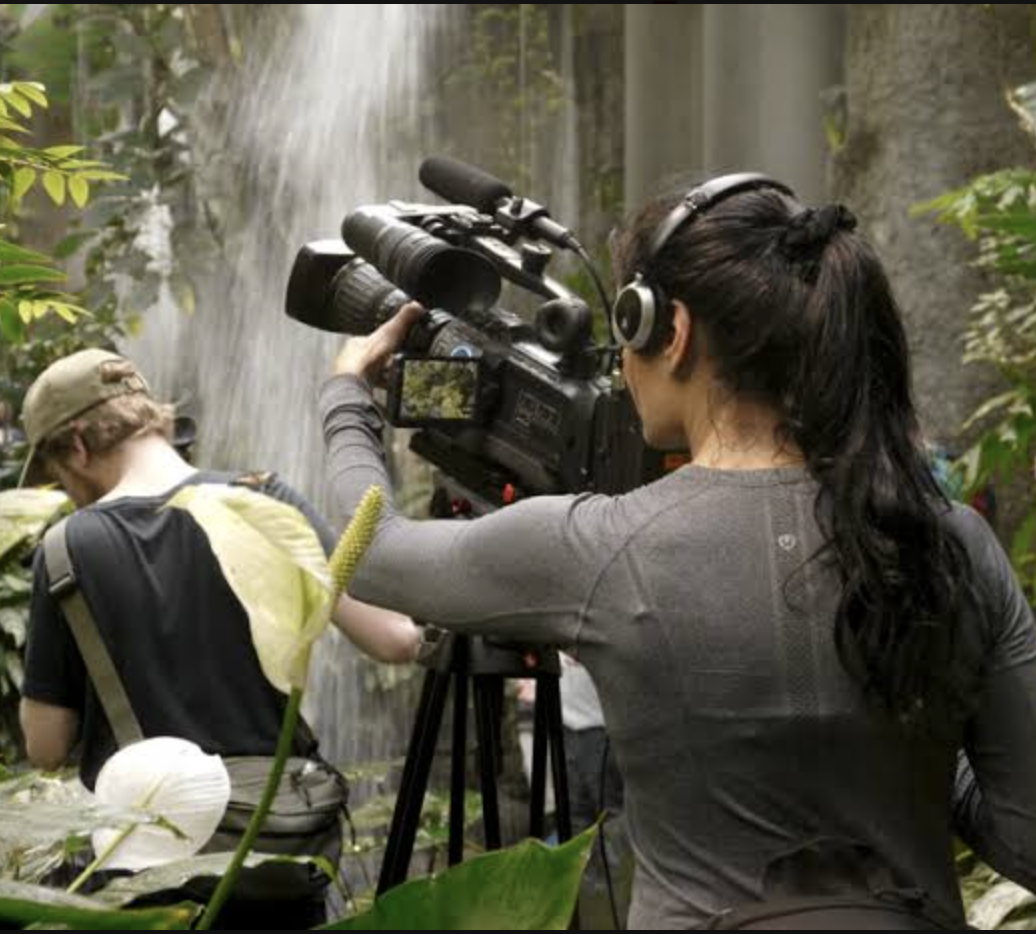
There are wonderful nature videos scattered all across YouTube. There are even whole television channels devoted largely to such videos. The Animal Channel, several National Geographic variants, periodic and unmatched specials from the BBC and more, such an abundance of material that it’s becoming more and more difficult to engage viewers interested in the subject matter, much less surprise them. That’s why the BBC will send out teams to spend multiple years shooting reams of footage in the hope of obtaining that highly elusive few minutes or even just seconds of the ultimate goal of nature photography: something new. Or, as the photographers in the field would call it, the money shot.
The lengths these men and women will go to obtain such footage flabbergasts the rest of us. In a world where instant gratification has become the norm, individuals and teams will spend a year centered on a single waterhole in Africa or a branch of the Amazon in Brazil to secure enough footage for just a few hours of screen time. I’ve encountered these folks at work. While the results of their efforts are often spectacular, the actual work is utterly boring. It’s repetitive, muscle-cramping, and usually occurs under extremely hot or extremely cold conditions (because exotic animals tend not to dwell in places like Southern California or the French Riviera).
Then there are the bugs. Thousands, millions of bugs. In the frozen north, in the steaming tropics. One day I hope to spend an educational hour observing how nature photographers cope with biting insects and parasites while fending off debilitating and sometimes potentially lethal diseases, because such sequences are cut from the finished project. Oh, there are plenty of shots of bugs. Sometimes entire shows are dedicated to bugs. But unless it’s a part of the narrative, you don’t see them while they’re tormenting the photographers.
It is hard to think of a profession where so much boredom leads to such joyful results. The frustrations, which we also rarely see depicted, can be overwhelming. I once spent a midweek couple of days at a local resort in the mountains well outside Quito, a place noted for its natural thermal pools. It was packed on weekends, when folks drove out from Ecuador’s capital to soak in the pools, but during the work week it was largely empty. A crew from BBC Nature was there to film the great variety of hummingbirds that frequent the surrounding cloud forest. Every day would see them drive out in 4x4s that they would have to abandon in favor of hiking through the forest in search of their tiny, swift-winged quarry. I can tell you that hiking uphill through equatorial jungle makes south Florida feel like Alaska. Never mind that you have to haul all your camera and other gear with you, all the while being assaulted by insects, some of which may remain unknown to science, some of which may carry diseases unknown to science.
It was here that I committed a serious faux pas while at the same time lounging in one of the resort’s several thermal pools. As the BBC team shuffled in, done for the day and carrying their equipment while looking like — well, like folks who had just spent hours and hours in untouched rainforest — I inquired of one what their principal goal had been that day.
“We’re trying to get some shots of the Shining Sunbeam.” At my blank expression he added, wiping sweat from beneath a perspiration-soaked wide-brimmed hat, “It’s a very large, very beautiful hummingbird.” He proceeded to describe it further.
“Oh,” I replied while leaning back against some smooth stone while steam rose around me, “there was one over there.” I pointed to a nearby hanging feeder. “Hung around for about half an hour.”
The look that poor photographer gave me suggested that it was a good thing he was utterly tuckered out, or the thought of rendering violence might have overwhelmed his proper British demeanor.
It taught me that if in your traveling you are fortunate enough to espy something truly exotic: a Princess Stephanie’s arapis, for example, or a jacarundi, or maybe some giant otters fighting a caiman, and there are professional photographers about who are there not as tourists but fighting to make a living, it behooves one to assay the lay of the photographic land before blurting, “Yeah, I played hide-and-seek with (pick your critter) just yesterday.” Kind of like the manager of a dive resort on the island of New Britain, which I had to reluctantly leave after days of bad weather, who called the next place I was staying to inform all and sundry, “The weather’s great now! Perfect for diving. We had a pod of orcas yesterday. Oh, and a sperm whale!”
True story, the old “If you’d only stayed another day” tale. It has stuck with me all these years, and I’ve still never seen a pod of orcas or a sperm whale.
But this being beautiful, Natureful Prescott, I see professional photographers at work here all the time. I get to admire and appreciate their great work. If I encounter one, especially one who is tired, hungry and bug-bitten after a day’s work, I am very careful not to say, “Just saw a pack of raccoons trying to take a fish away from a black bear while it was being dive-bombed by a bald eagle.”
It’s the tactful thing to do.
Prescott resident Alan Dean Foster is the author of 130 books. Follow him at AlanDeanFoster. com.


