
YESTERDAY, in the company of friends and my year-old daughter Reilly, I participated in the annual Prescott-area Christmas Bird Count (CBC). I’ve written about the CBC in the past — in short, it’s an annual tradition in which groups of volunteers conduct detailed surveys of predetermined areas to help gauge the health and population density of local avian species.
I’ve been in charge of the same area, or “patch,” for over a decade, so I know the landscape well and have been able to observe trends over time. One factor that’s always fascinated me, both during the CBC and through the rest of the year, is the effect weather has on birds. What may seem like a minor change, something we might mention casually in conversation, can dramatically alter their environment, sometimes for the better, sometimes for worse. These effects can occur on both micro and macro scales.
Yesterday’s weather could confidently be described as perfect: a cool but comfortable morning followed by clear skies and afternoon temperatures in the 60s, eventually topping out at a pleasant 70 degrees. While this made for an enjoyable day outdoors, weather like this in December has an interesting and often counterintuitive effect on birds. Simply put, we didn’t see many of them.
Our assigned area is a patchwork of large neighborhoods interwoven with excellent natural habitat. Many of the homes have bird feeders, which have become reliable and predictable observation points year after year. This time, however, activity at those feeders was minimal. The neighborhoods themselves were surprisingly quiet, yet within the natural areas bordering them we found scattered pockets of activity. The obvious question is: what was going on?
In short, the birds are responding to reduced stress. This is the third mild winter we’ve experienced in a row, and my data from this period suggests a decline in observed bird numbers within my patch. That does not necessarily mean the birds are gone. Instead, it appears many have simply shifted their behavior and distribution. While feeders provide dependable sources of food, birds will always prefer their natural diet when conditions allow. Mild weather reduces the urgency to seek out supplemental feeding.
Cold weather saps energy, just as it does for us. During harsh conditions, birds must eat almost constantly just to maintain basic body functions. A few days without reliable food can be fatal. When the weather is unusually warm, however, birds can afford to spend more time foraging naturally. Seeds are easier to find when snow is absent, and I even observed uncharacteristically high insect activity for December. This provides an additional food source that is often completely unavailable during a typical winter, reducing the need for species like western bluebirds and American robins to rely so heavily on berries.
Western bluebirds, in particular, stood out this year, and not in a good way. In past counts I’ve recorded dozens, if not scores, of bluebirds throughout the neighborhoods, where they take full advantage of front-yard berry-producing shrubs. This year we saw exactly one. Even more interesting was their near-total absence from the surrounding natural habitat as well.
Once again, weather likely plays a role, but in a slightly different way. During summer, western bluebirds spend most of their time in higher-elevation pine forests. Typically they migrate downslope in winter, into the pinyon-juniper belt and grasslands around Prescott, where juniper berries and other fruits are plentiful. While I have not confirmed this, it seems likely that decent numbers of bluebirds remained at higher elevations this year. Mild conditions at elevation may have removed the pressure to make that seasonal shift. Compounding this, poor precipitation during the last two monsoon seasons has resulted in reduced berry production. Taken together these may indicate a broader regional redistribution, with bluebirds and similar species concentrating where food is more abundant.
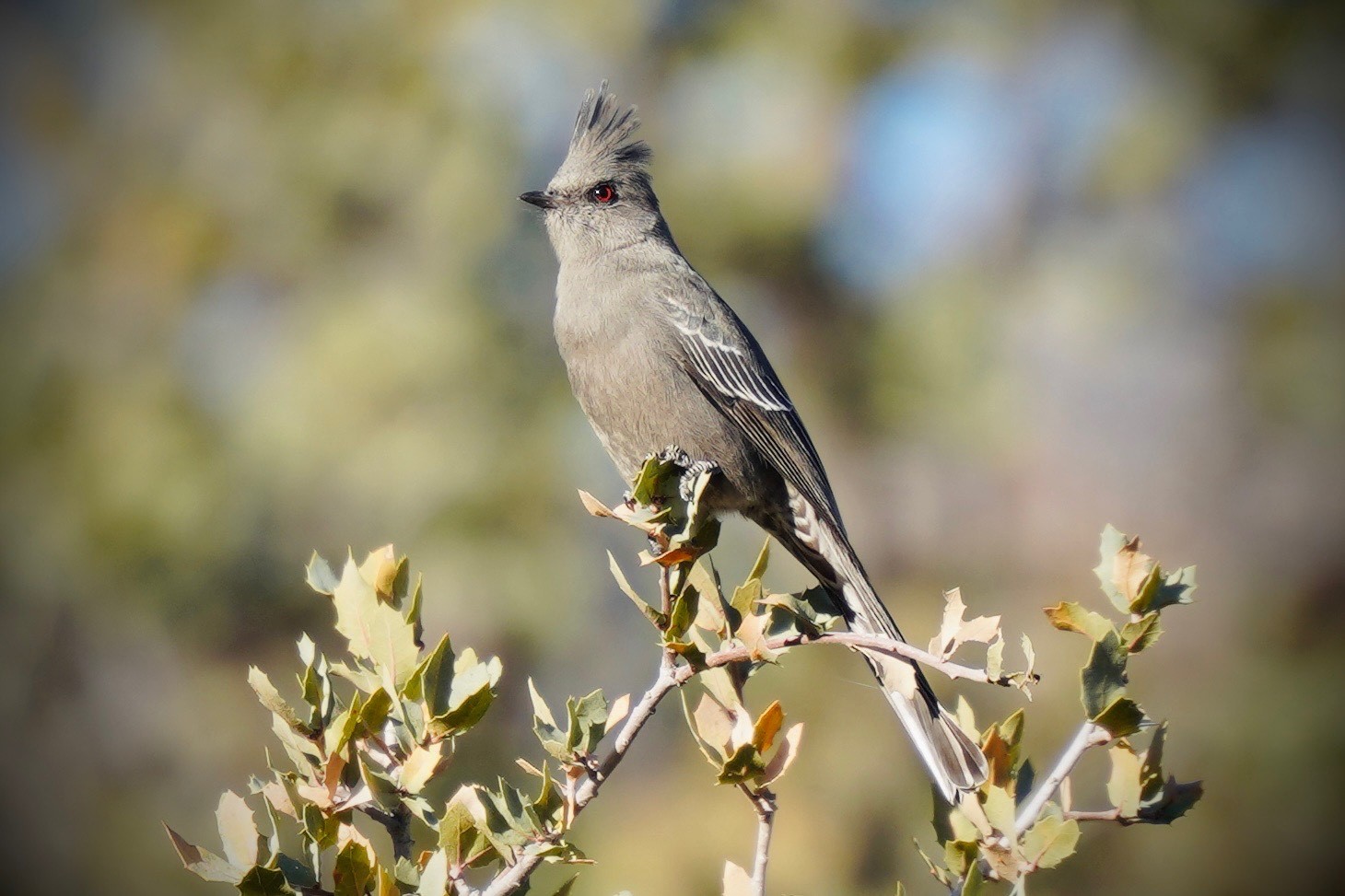
The same pattern applies to American robins. In previous years I’ve recorded hundreds within my patch; this year we counted fewer than thirty. After speaking with Eric Moore, owner of The Lookout, I learned that he recorded higher-than-normal numbers of robins near Granite Basin Lake, where silk tassel and manzanita crops were especially robust. Other notable absences for similar reasons included cedar waxwing, Townsend’s solitaire and phainopepla, though we did manage to record a single individual of the latter species.
While these observations may not point to a larger problem, they do highlight how localized weather patterns can ripple through avian behavior. Pleasant weather during the colder months often results in lackluster birding, and the opposite is frequently true. The key is recognizing these anomalies and adjusting expectations accordingly. The birds aren’t gone, they’ve just shifted. Find the places where their needs are being met, and you’re almost guaranteed a rewarding day in the field.
The Prescott Audubon Society is an official chapter of the National Audubon Society. Check it out online at PrescottAudubon.org.


