
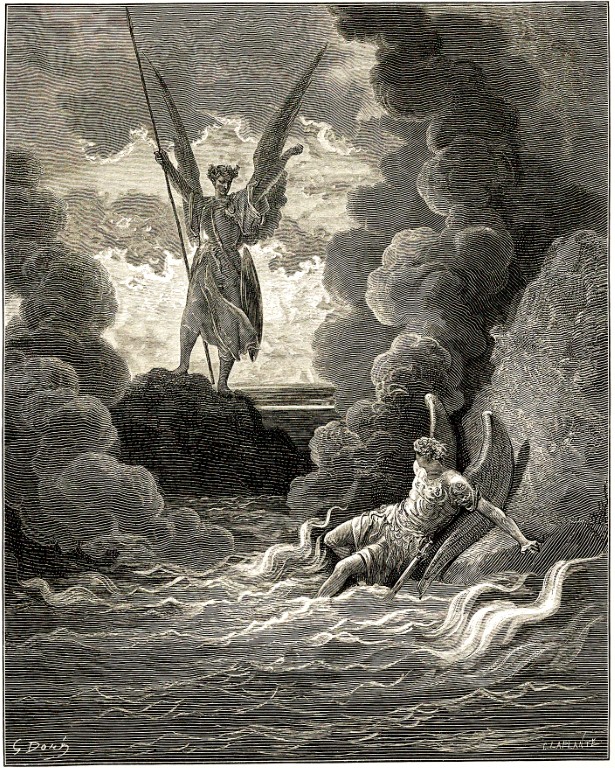
Ths month the Elks Performing Arts Center will be the setting for an ambitious and quietly radical act of communal literature: a twelve-hour marathon reading of Paradise Lost, from 8am to 8pm, in the Crystal Hall Ballroom. This event’s host will be local writer Clay Smith, who invites the community to come and go throughout the day, listen, read aloud if they wish, and experience one of the most influential poems in the English language as it was meant to be heard: spoken.
Written by John Milton and first published in 1667, Paradise Lost is a towering epic poem in blank verse that retells the biblical story of the Fall of Man. Across twelve books and more than 10,000 lines, Milton explores free will, obedience, rebellion and the moral cost of choice. The work has inspired centuries of debate, particularly for its portrayal of Satan as a complex, charismatic and deeply human figure.
In conversation, Smith describes Paradise Lost not as a dry theological relic, but as a living, provocative text that still resonates. The poem begins in medias res, with Satan and the fallen angels cast into Hell after rebelling against God. What follows is not merely a morality tale, but a sustained philosophical inquiry into power, autonomy and consequence.
Milton was definitely a Christian,” Smith notes, “but the depth and breadth of thought in this poem lends itself to wide interpretation.” Satan, he argues, functions as both villain and epic hero — an antihero centuries before the term existed. That ambiguity unsettled Milton’s contemporaries and continues to unsettle readers today.
Written during a period of intense religious and political upheaval in England, Paradise Lost carried subversive undertones. Its arguments for self-rule and resistance to absolute authority were not exactly welcome ideas under a restored monarchy. “It was a dangerous thing to write,” Smith says. “And a dangerous thing to read.”
Why read it aloud?
Despite its reputation, Paradise Lost was never meant to be a solitary endurance test. The language — early modern English, closer to Shakespeare than to us — can feel dense on the page. Hearing it aloud changes everything.
Milton wrote the poem in blank iambic pentameter, the same rhythmic structure Shakespeare used. When spoken, that underlying cadence carries the listener forward. “Hearing poetry out loud often makes it easier to understand,” Smith explains. “The rhythm does some of the work for you.”
The marathon format also removes the pressure of “getting it right.” Readers take turns. Others simply listen. People can step out, come back, or stay all day. “It’s the easiest marathon you’ll ever run,” Smith laughs. “Pajamas, chairs, snacks and literature.”
A community experience
The event draws inspiration from similar marathon readings Smith attended while studying at the University of Arizona, where Paradise Lost was read annually as a shared ritual among students and faculty. He hopes to recreate that sense of open, welcoming literary community in Prescott.
No tickets or reservations are required. The doors remain open all day. A donation jar will be available to support Elks scholarship and outreach programs, making the event both a cultural offering and a quiet act of giving back.
Whether you arrive for “The War in Heaven” (Book VI), the introduction of Adam and Eve (Book IV), or simply wander in to let the language wash over you, the invitation is simple: listen, participate if you wish, and be part of something rare.
The open reading of Paradise Lost will take place in the Crystal Hall Ballroom at the Elks Performing Arts Center in Prescott on Saturday February 12 8am-8pm. Admission is free and donationas are welcome. For more information contact clay@claysmithcreative.com.


